Community-Centered
Learning thrives in a community — collaborative, inclusive, and alive with shared rhythm.
About
The EZ Model of Language Learning — a multi-modal method combining antiquity, modernity, fantasy, and best practices in teaching English as a second and foreign language.
The Philosophy
The EZ Model and the Meta-Self Learning Model™ are not a collection of separate pages — together they form an ecosystem: books, music, curriculum, research, storytelling, movement, and technology, all growing from one vision of whole-person learning.
This ecosystem is rooted in humanism — but not the secular, liberal, or evolutionary kind. Here, humanism means kindness, compassion, togetherness, respect, and care for all living beings. Classrooms are learner-centered and inclusive; subjects are treated as languages with a syntax that thrives in a community; critical thinking draws on Aristotelian questioning; and yoga and music dissolve the barriers between the mental, the physical, and the spiritual.
Drawing on thinkers such as Yuval Noah Harari, the model gives special weight to collective imagination and intersubjectivity — capacities that belong to the sociocultural domain. Our goal is to cultivate a healthier collective imagination through the eight Meta-Self domains: to help learners see themselves not as isolated individuals but as participants in a shared human world.
Learning thrives in a community — collaborative, inclusive, and alive with shared rhythm.
Aristotle's questions — what, when, where, how, who, why — woven into every story and song.
Practices that dissolve the barriers between the mental, the physical, and the spiritual.
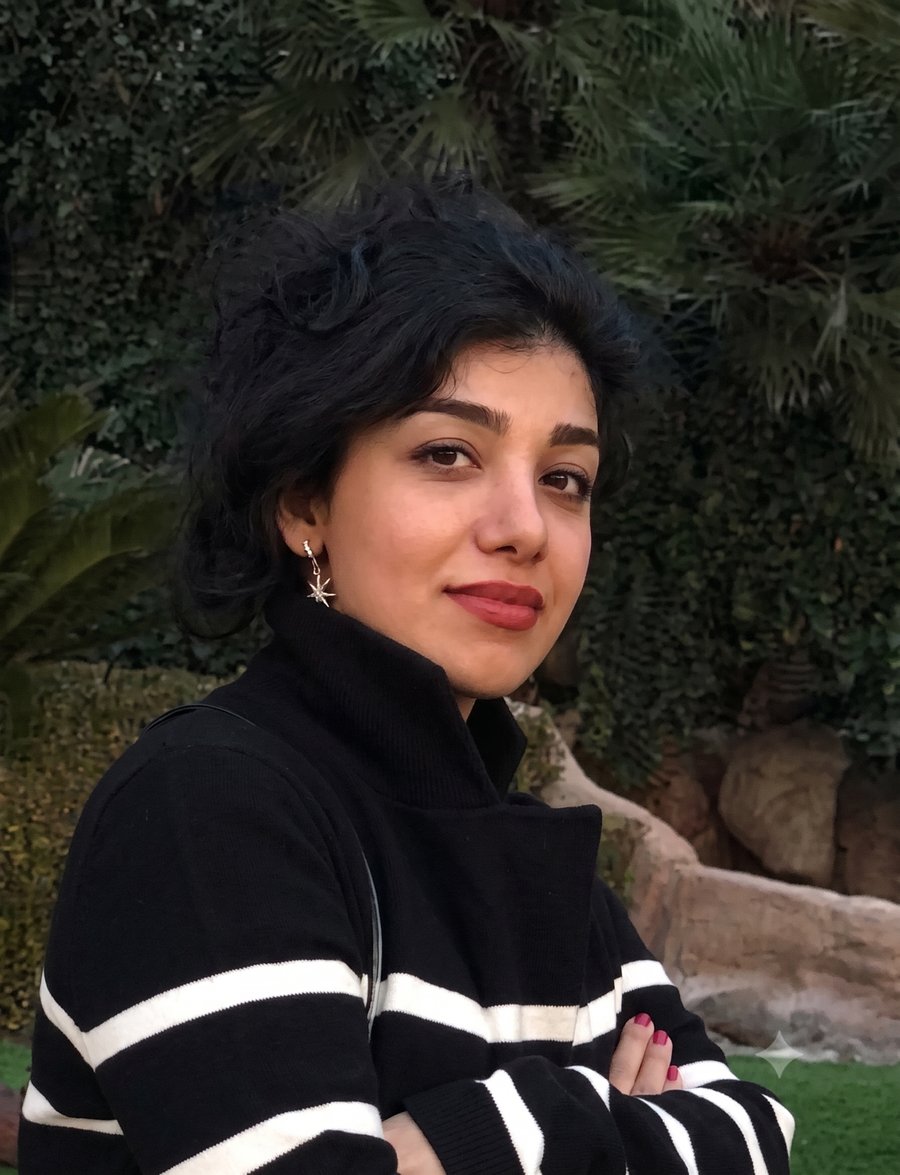
The Author
An educator, researcher, curriculum developer, author, and lifelong learner whose work explores the intersection of language learning, human development, educational assessment, creativity, and artificial intelligence. For more than fifteen years, one question has guided her teaching, research, and writing: How can education help people become more fully human?
She earned her Ph.D. in Language, Literacy, and Culture from the University of Massachusetts Amherst, following a Master's and Bachelor's in Teaching English as a Foreign Language (TEFL). Today these ideas come together through the Meta-Self Learning Initiative™ — an evolving educational ecosystem of research, books, curriculum, multimedia learning, and professional development.
Teaching has been at the center of my professional life — English language learners, university students, teachers, multilingual learners, and Persian language students across many settings:
A highlight of this journey: collaboration with Professor Edmund W. Gordon on assessment as a tool for supporting learning rather than simply measuring performance.
Education is one of humanity's greatest opportunities for transformation. Knowledge is important, but knowledge alone is not enough — education should also cultivate wisdom, compassion, creativity, resilience, curiosity, ethical responsibility, and a lifelong commitment to learning.
"Learning is not simply about knowing more. It is about becoming more."
Beyond academia, music, storytelling, poetry, movement, cultural dialogue, and creativity remind us that learning is not only cognitive — it is emotional, social, cultural, embodied, and deeply human.
The Journey
Early studies on corrective feedback, emotional intelligence, and discourse — the questions that would shape everything after.
The 3CA and M3CA models take shape: concept maps, collaboration, and assessment — published in SAGE Open and beyond.
The EZ Model of Learning Language and Becoming a Fighter are completed — seven chapters, eight songs, and the Museum of Reincarnation.
AI meets the classroom: a presentation on ChatGPT, human reasoning, and emotional development.
Eight domains, one framework — with the ESL 110 book, the app, and Beyond Borders: Humanity in active development.